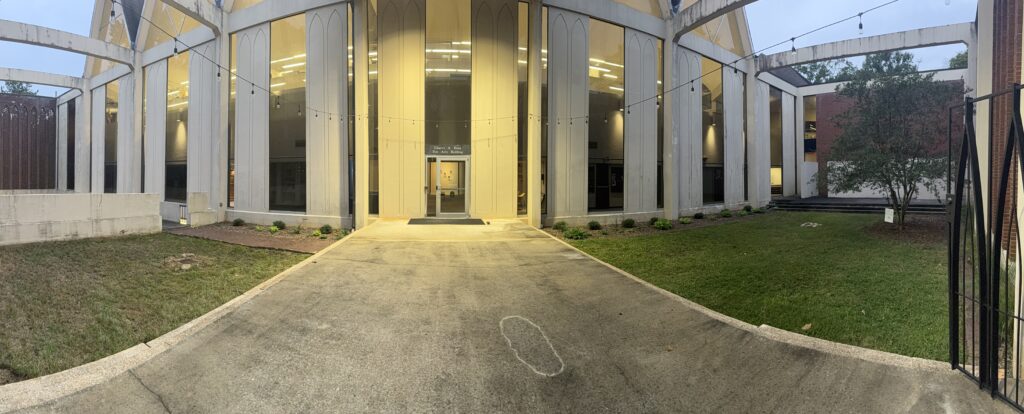
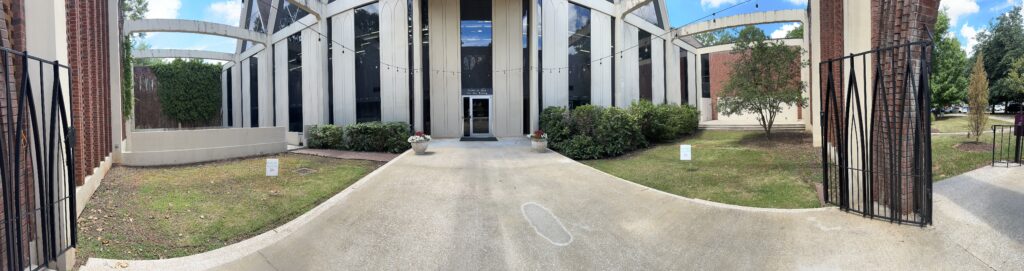
As part of Building on Dana, we established the third organic demonstration plot at the College (2024) in the Dana Fine Arts Building to support pollinators and increase biodiversity. It has been evolving over the past two years.
Native gardens have multiple environmental benefits. One might say that they are a way that the College manifests our mission to engage the social and intellectual challenges and our commitment to climate resilience, for which we have partnered with the City of Decatur.
While our sustainable priorities are visible throughout campus, from our solar panels on the parking deck to our bird sanctuary, the native plans in Dana also contribute to environmental health in multiple ways. They facilitate carbon sequestration by removing carbon dioxide from the air and storing it in the soil, helping to reduce greenhouse gasses and , Stormwater management by increasing water infiltration and reducing surface runoff and erosion, lower energy and resource use (once established, native plants to not require synthetic fertilizers, chemical pesticides or frequent watering), and promote ecosystem resilience by supporting diverse insect and wildlife populations, they will help create and maintain food webs that can better persist in and adapt to shifting weather patterns and climate change.
At the same time, they provide outdoor spaces for our students and visitors to take a break, make some sketches, enjoy some performances and even ponder the intersection of built and natural environments in the way John Portman envisioned.
Here are the native plants currently flourishing in our upper courtyards:
At the front entrance (south)
Dwarf Yaupon Holly (Ilex vomitoria) forms white blooms (females plants) in the spring that support a variety of bees and butterflies; their red berries provide food for birds in the fall. These plants typically grow 3 to 5 feet tall.
Christmas Fern (Polystichum acrostichoides) is evergreen. It serves as a larval host for a variety of moths and caterpillars (such as the Eastern Comma butterfly).
New York Fern (Thelypteris noveboracensis) These plants serve their delicate chartreuse fronds add vibrancy to the gardens during the spring and summer; they go dormant during the late fall and winter. The foliage serves as a larval host plant and food source for specialized moths, including the Pink-shaded Fern Moth, the American Angle Shades Moth, and the Closebanded Yellowhorn Moth. Their fronts also serve as nesting materials for birds.
Foamflowers (Tiarella cordifolia) provide nectar, pollen, and seeds that feed a variety of local wildlife and insects. Ground-feeding birds, such as sparrows, eat the seeds produced by the plant. They serve as host plants for multiple butterfly and moth species.
Dwarf Crested Iris (Iris cristata) attracts hummingbirds and bees.
Along the north wall
Stokes Asters (Stokesia laevis) produce late-summer to early fall blooms, supporting a variety of bees and butterflies such as Black Swallowtails and American Lady butterflies).
Purple Coneflower (Echinacea purpurea) is perhaps the most significant plant in the garden for the wildlife it supports, and it blooms often throughout the summer. It attracts a number of bees to feed on nectar and carry pollen as well as many butterflies. Hummingbirds also visit coneflowers. The seed heads, if left to dry, feed birds in the fall and winter; if they are clipped but left tall, stems can shelter native bees during the winter.
Switchgrass serves as larval host for butterflies and moths and provides structural support for other wildlife.
The large Yaupon Holly (Ilex vomitoria) that stands in the northwest corner is part of Agnes Scott College’s Arboretum, this one in honor of Dudley Sanders, who was part of the Department of Theater from to 1979 to 2018.
As you can see, the flowering plants purple and/or white blooms, chosen to reflect the colors of the College in our landscape.
Alternative Lawns
The two expanses of alternative lawna on the east and west sides. The smaller one on the east side is planted with a variety of native grasses, including Little Bluestem (Schizachyrium scoparium), Virginia Wildrye (Elymus virginicus), Purpletop (Tridens flavus), and Broomsedge (Andropogon virginicus). Together these grasses serve as larval host plants for butterflies and moths, and they provide overwintering habitat and nesting structure for wildlife, including bees and birds.
The larger one on the west side is fescue and clover, the only plants in the north courtyards that are not native. This combination is intended to form a thick lawn; the white clover is still providing food for pollinators in from spring to fall, and audience space for performances in our outdoor theater.