September-October 2026
We are learning from the building – again.
This semester, for me, is a return from sabbatical, during which time I could pause and reflect on the ways the Building on Dana project has influenced me professionally and personally. Completing the Azalea Project for Faculty Development in Environmental Sustainability Studies in August 2025 was a logical step from our re:wilding of Dana, another opportunity for me to be shown that attending to the landscape is more central than I had fully realized to my intellectual pursuits. I have spent two decades looking at the intersections of sculpture, buildings, cities. Fall 2025, after the Azalea Project, was the first time I asked students to observe and analyze surrounding landscape and human interactions with the same attention they devote to the public sculptures. And, of course, it seems so obvious in retrospect.
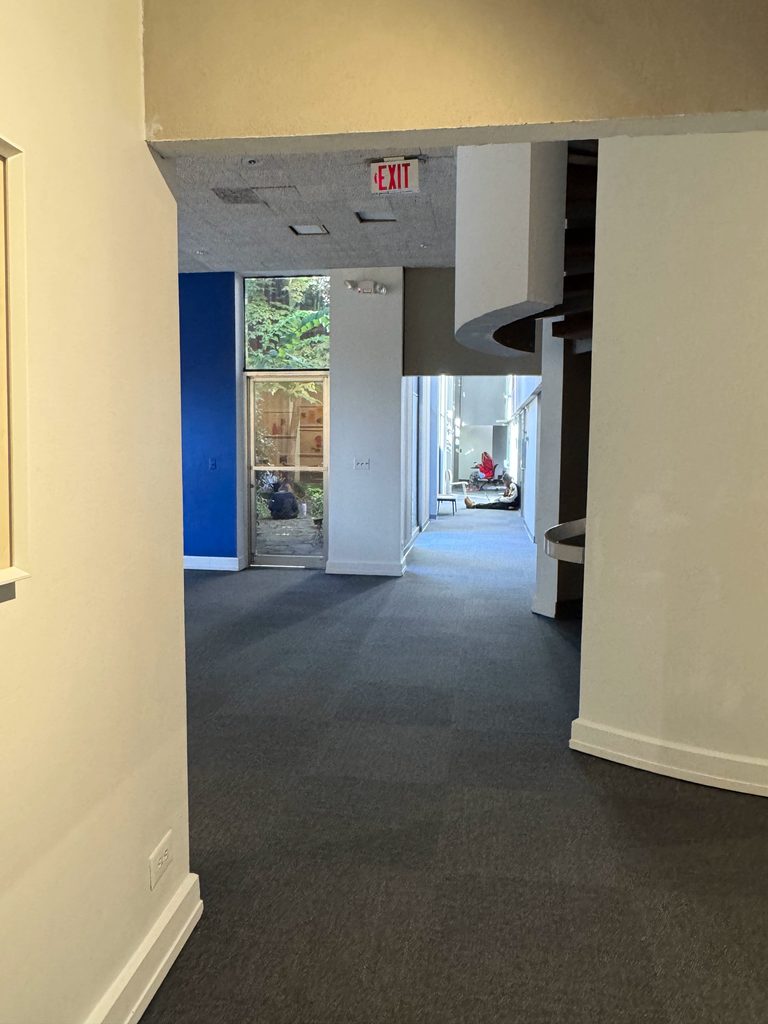
This semester my Visual Practices class is using the material from Building on Dana in our study of the building. We are taking on the inner court (aka secret garden) and moving toward a proposal(as I hope are doing in all our gardens) to reimagine the space in ways that carry forward the intentions and spirit of the original designs, but update them—as Portman anticipated—to accommodate current uses and needs, rethinking them, for students in 2026. This building was, after all, from the windowless art history lecture room to the mechanics of the theater, designed explicitly for the inspiration and agency of undergraduates.
Archival photographs and original landscape plans (found by Dylan Bulford ’26 Psychology and Paige Kelly ’27 Chemistry) tell us that the original space was minimally planted, with brick-edged beds, very narrow, on the south and north sides. The middle was a gravel area, which allowed for circulation and, according to a few photographs, pedestals with students’ sculptures. With that in mind, we are imagining how it might change, to renew to some of these original functions, facilitate a communal space for displays and events, and embrace the abundance of natives plants and active wildlife in this space. (The sounds and movements of birds were among the salient elements all students noticed in our courtyards when they were doing close looking and imaging exercised, visual practices).
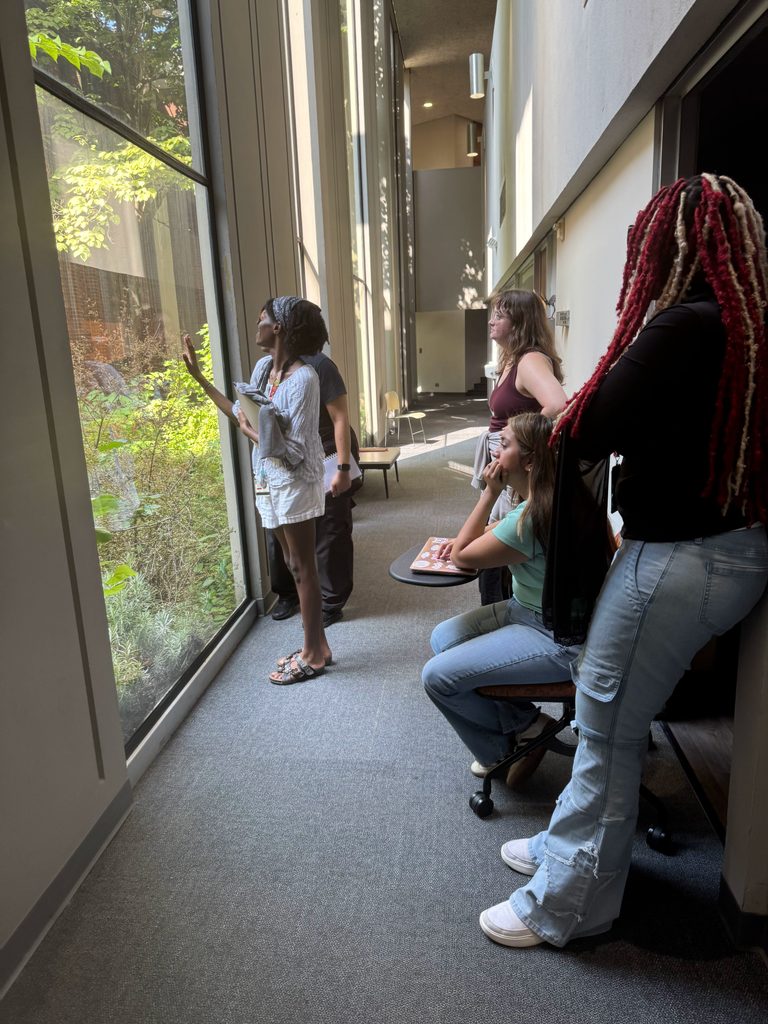
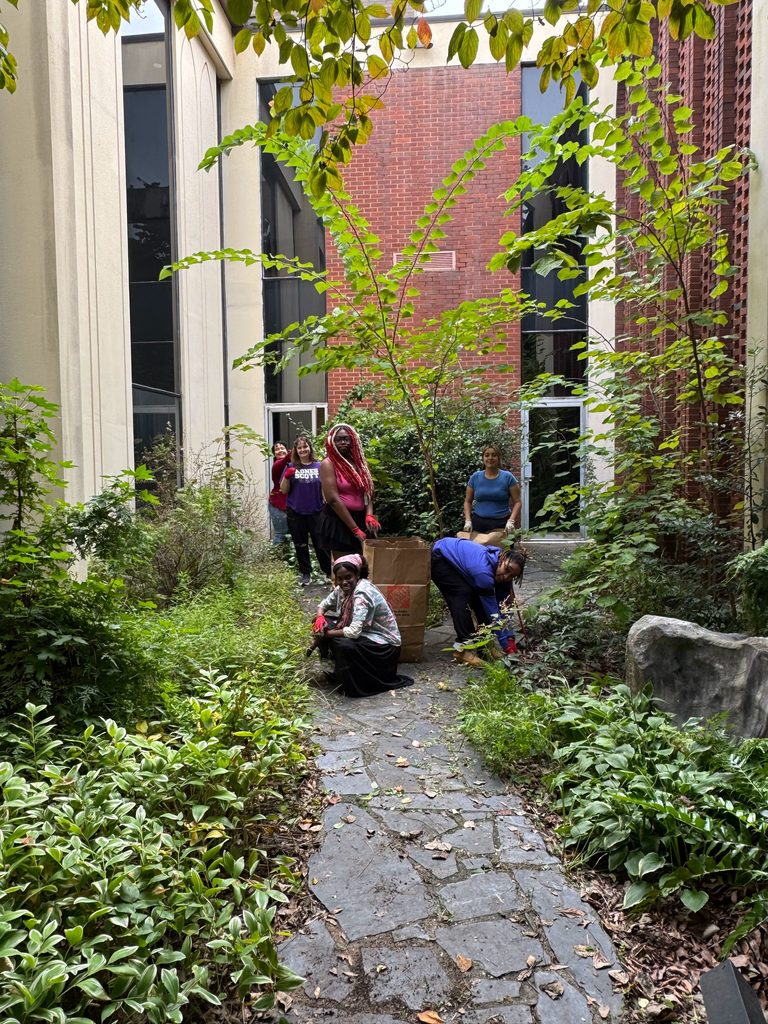
They moved beyond some initial discomfort with my holding classes in the long corridors so that we could look together (and include those with allergies) at the outdoor spaces they had studied and imaged. And when invited to get their hands dirty in the secret garden, they didn’t hesitate; even those with seasonal allergies were prepared. We together made the passageway through the garden accessible again; it had rewilded with abundance during my sabbatical. And while this class activity was an explicit invitation and not a requirement, I was delighted to work with them during this sacred time. It is the same way we started the Building on Dana project by tidying the landscape and removing some of the volunteer plants that occluded the architectural details, unaware then of the discoveries that awaited us.
And one of my own discoveries has been the spiritual aspect of tending the land and applying acts of attention and patience, which I have honed through decades of studying art and share with students as foundational skills, to the tasks of planting natives (which sleep, creep, and leap in a three-year period before establishing, not unlike our students who almost always come into their own in their junior years) and also nurturing collaborations, which have guided this project since the beginning. It is harder to work together than alone. And the gardens have reminded me of the creative process in our field of visual practice—seeking to realize an idea by gathering resources and materials and putting them together—to communicate the intangible in visual terms. That process requires risk, causes frustration (chamber bitter and mulberry weed!), and, in moments of serendipity, shows us new ways forward, often better than we imagined.
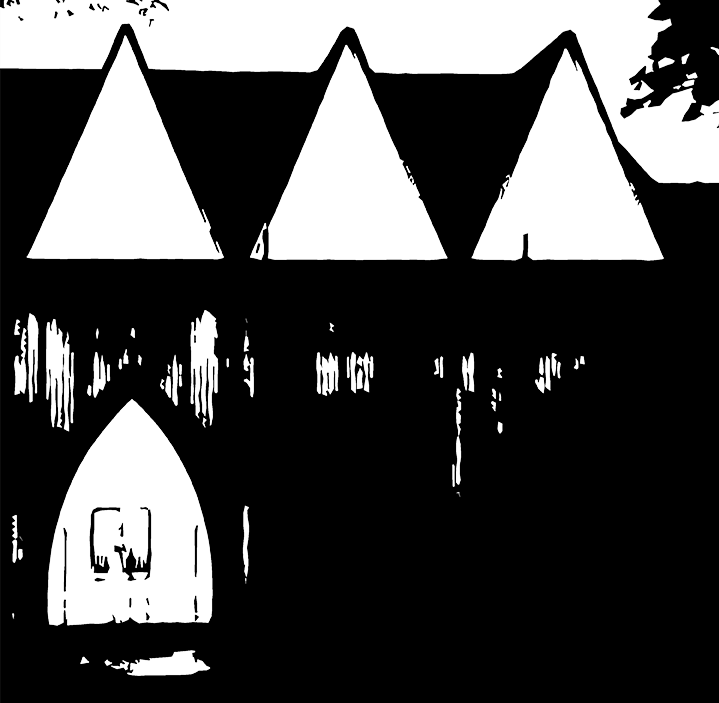
This building in which I get to come to work every day is a gift and an inspiration. It is an architectural gem, one of few early designs from John Portman still close to its original condition. It means even more to me now because I understand its significance in the development of Portman’s designs and because I have seen the light move across the courtyard during a sunrise, and tended its spaces, inside and out, in more physical and intellectual ways than I ever imagined. Portman’s “cathedral to art” has provided so many moments of connection, caring, creativity, compassion. It has facilitated, as Marqus Cole, Organizing Director of Georgia Interfaith Power and Light, helped me see during the Azalea Project and confirm again in a visit this week, experiences of awe for which I am grateful. They show up in the play of light on the walls, the Stokes Asters in the north courtyard, the grasshoppers in our native grasses. And I have come to feel the gratitude for the responsibility and the opportunity for holding this building and our students, with colleagues, together, in all of the ways I/we have.